Do you wake up tired after a full night in bed, or has someone told you that you snore loudly or stop breathing during sleep? These can be signs of obstructive sleep apnea, a common sleep disorder that often goes undiagnosed.
At Smile Forever Family Dentistry, Dr. Narender Dudee offers custom oral appliance therapy (OAT) as a comfortable, CPAP-free treatment option for patients in Morrisville, Cary, RTP, and the surrounding areas.
Using in-office CBCT scanning and 3D digital technology, Dr. Dudee designs a precisely fitted sleep appliance that helps keep your airway open so you can breathe better, sleep more soundly, and wake up feeling rested.
What Is Obstructive Sleep Apnea?
Obstructive sleep apnea (OSA) happens when the soft tissues at the back of the throat relax during sleep and partially or completely block the airway. Each blockage interrupts your breathing for a few seconds or longer, lowers the oxygen level in your blood, and briefly wakes your brain so you can start breathing again. This cycle can repeat dozens or even hundreds of times a night, usually without you remembering it.
Sleep apnea affects adults of all ages and body types. Risk factors include excess weight, a large neck circumference, a narrow airway or recessed lower jaw, enlarged tonsils, nasal congestion, alcohol use before bed, smoking, and a family history of sleep apnea. Men are more likely to develop OSA, though the risk for women rises after menopause.
Common Signs and Symptoms of Sleep Apnea
- Loud, chronic snoring
- Gasping, choking, or pauses in breathing during sleep (often noticed by a bed partner)
- Excessive daytime sleepiness or fatigue
- Morning headaches
- Dry mouth or sore throat upon waking
- Difficulty concentrating, memory problems, or irritability
- Waking up frequently at night or needing to urinate during the night
- Teeth grinding (bruxism)
Why Sleep Apnea Treatment Matters
Untreated sleep apnea is more than a nuisance. Over time, repeated drops in oxygen and disrupted sleep are associated with high blood pressure, heart disease, stroke, atrial fibrillation, type 2 diabetes, depression, and an increased risk of drowsy-driving accidents. Treating sleep apnea can improve sleep quality, daytime alertness, and overall quality of life.
What Is Oral Appliance Therapy?
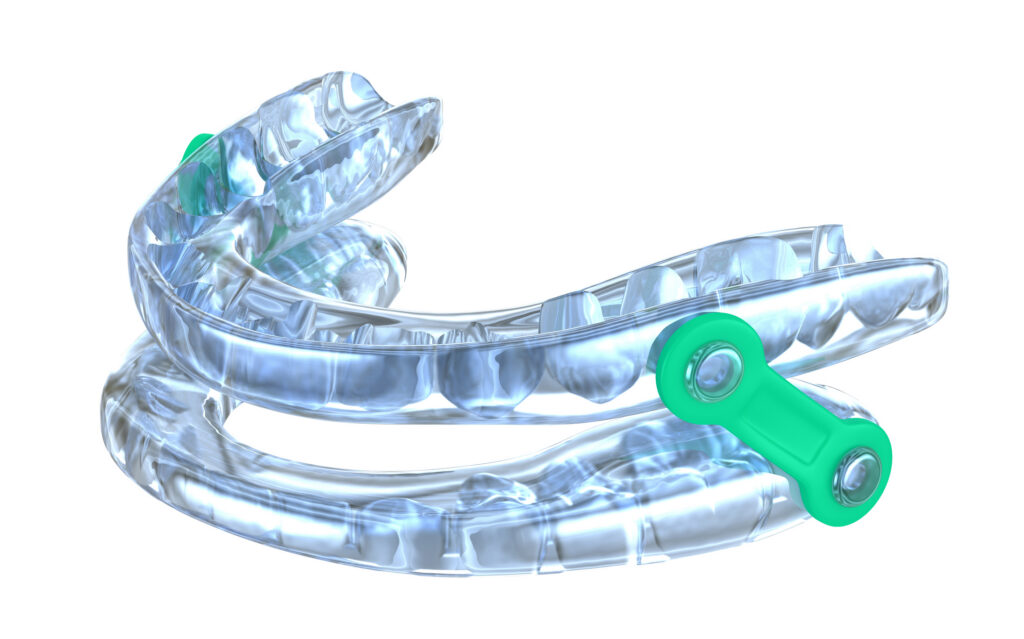
Oral appliance therapy uses a custom-made device, similar to a sports mouthguard or orthodontic retainer, that you wear only while you sleep. The most common type is a mandibular advancement device, which gently holds your lower jaw in a slightly forward position. This helps keep your tongue and the soft tissues of your throat from collapsing into your airway, so air can flow more freely through the night.
The American Academy of Sleep Medicine and the American Academy of Dental Sleep Medicine recommend oral appliance therapy for adults with obstructive sleep apnea who cannot tolerate CPAP or who prefer an alternative. It is often a good first-line option for people with mild to moderate sleep apnea and for those who snore without sleep apnea.
Benefits of Oral Appliance Therapy
Many patients find oral appliance therapy easier to live with than a CPAP machine.
- Comfortable to wear: Your appliance is custom-fitted to your teeth and adjustable for
- Quiet: There is no motor or airflow noise to disturb you or your partner.
- No mask or hoses: You can sleep in your preferred position without straps or tubing.
- Easy to travel with: The appliance fits in a small case, needs no electricity, and is easy to pack in a carry-on.
- Simple to care for: Daily cleaning takes only a minute or two.
- Reduces snoring: Many patients and bed partners notice quieter nights.
- Better consistency for many patients: Because it is comfortable and convenient, many people wear their appliance more regularly, and regular nightly use is key to getting results.
Oral appliances are not right for everyone. Severe sleep apnea is usually best treated with CPAP, though an oral appliance may still help when CPAP is not tolerated. Dr. Dudee will work with your physician or sleep specialist to determine the best approach for you.